Viral Marketing Trends
Labubu Dolls: The Story Behind Christmas 2025's Most Viral Collectible
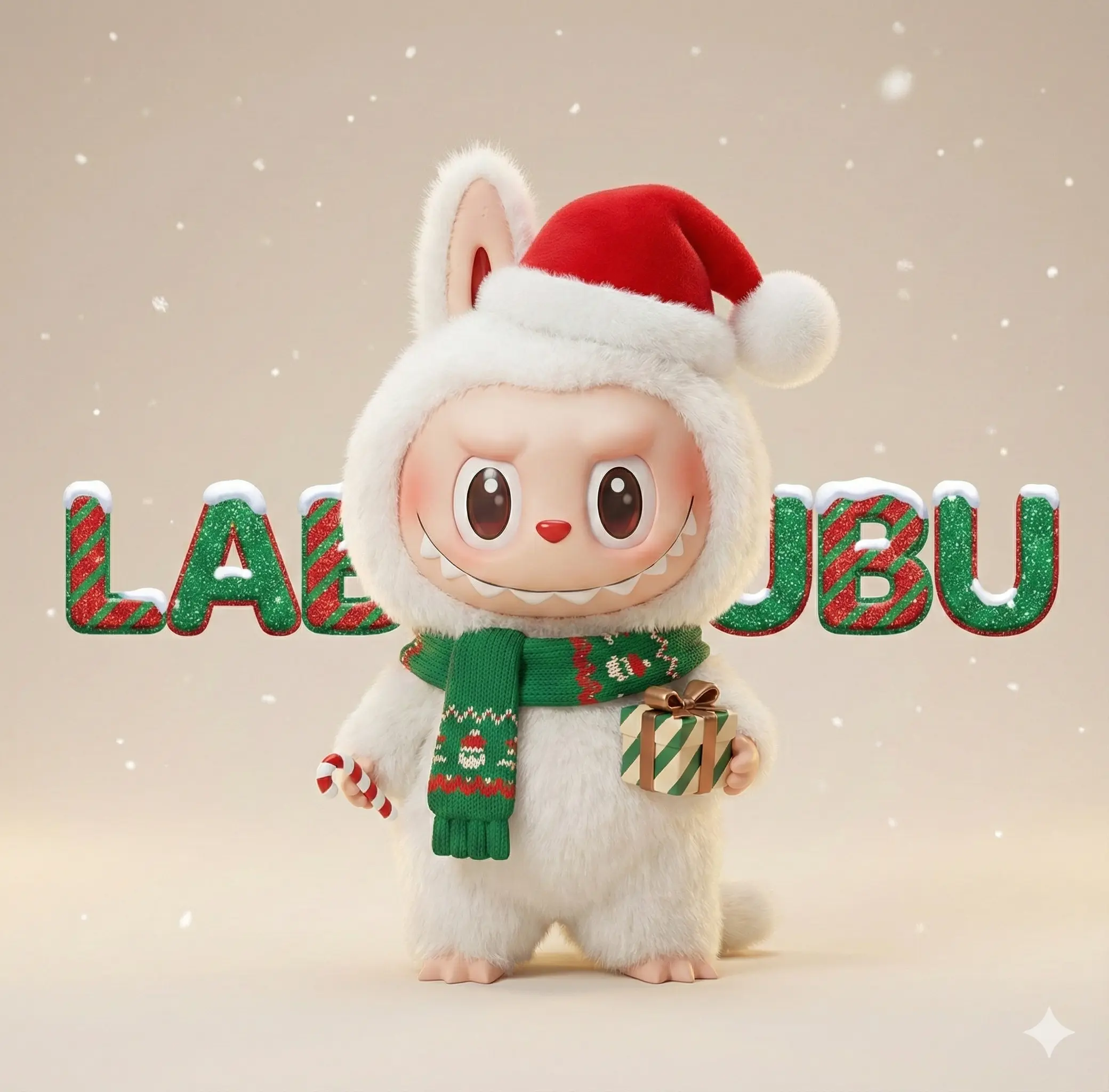
If you've been anywhere near social media this year, you've probably seen them: fuzzy little creatures with rabbit ears, toothy grins, and an oddly captivating charm that's somehow both adorable and slightly unsettling. They're called Labubu dolls, and they've taken over everything from celebrity handbags to Christmas wish lists in 2025.
Here at Wixenco in West Chester, we're all about tracking the intersection of tech, culture, and the trends that shape our digital world. And let me tell you, the Labubu phenomenon is a masterclass in how viral culture spreads in the modern age. So grab your favorite beverage, get comfortable, and let's dive into the wild story of these little monsters that have captured the hearts (and wallets) of millions.
The Birth of a Monster: Kasing Lung's Creative Journey
The Labubu story begins not in a corporate boardroom, but in the sketchbook of Hong Kong artist Kasing Lung. Born in 1972, Lung moved to the Netherlands with his family when he was just six years old. Picture this: a young kid who doesn't speak the language, watching his parents work tirelessly at their Chinese restaurant, finding solace in the only universal language he could understand—picture books.
Lung has often cited Maurice Sendak's "Where the Wild Things Are" as a major influence. Like the book's protagonist Max, young Lung would escape into imaginary worlds where he could be king of his own wild creatures. That childhood experience of feeling like an outsider, combined with his exposure to European fairy tales and Nordic folklore, would eventually give birth to something truly unique.
After studying art and working as a freelance illustrator, Lung created "The Monsters" series in 2015—a collection of picture books featuring a tribe of mischievous elves inspired by Scandinavian mythology. Among this cast of characters was Labubu, whose name comes from "lub dub," the sound of a heartbeat. With nine sharp teeth, pointy ears, oversized eyes, and a playful grin, Labubu was designed to embody both mischief and kindness—a character who always means well but often creates chaos with good intentions.
From Sketchbook to Sensation: The Pop Mart Partnership
Here's where things get interesting from a business and tech perspective. Lung's characters were beloved in artistic circles, but they remained relatively niche until 2019, when Chinese toy company Pop Mart entered the picture.
Pop Mart's founder, Wang Ning, had been observing a trend in Japan: Gashapon vending machines that dispensed capsule toys, creating an element of surprise with every purchase. Wang recognized that this "blind box" concept—where you don't know what you're getting until you open the package—tapped into something primal in human psychology: the thrill of anticipation and the collector's drive to complete a set.
When Pop Mart partnered exclusively with Lung in 2019 to transform his Monsters characters into collectible figurines sold in blind boxes, something magical happened. The first Monsters series launch broke sales records in the art toy category. But the real explosion was still to come.
The Celebrity Effect and Social Media Amplification
Fast forward to April 2024, when BLACKPINK's Lisa posted photos on Instagram featuring Labubu dolls dangling from her designer bags. What happened next is a textbook example of how viral trends spread in the social media age.
Within weeks, the "Labubu on your bag" trend had exploded across Southeast Asia, particularly in Lisa's home country of Thailand. Soon, other celebrities jumped on board: Rihanna, Dua Lipa, Kim Kardashian, David Beckham, and tennis star Naomi Osaka (who named her custom Labubus "Andre Swagassi" and "Billie Jean Bling") were all spotted with the fuzzy creatures.
TikTok and Instagram became flooded with unboxing videos, hunting expeditions to Pop Mart stores, and elaborate displays of Labubu collections. The algorithm loved it, pushing Labubu content to millions of users who had never heard of these characters before. By mid-2025, watch time on Labubu-related content had increased more than 400% compared to just a few months earlier.
The Numbers Behind the Craze
Let's talk data, because the statistics around Labubu are frankly mind-blowing. In the first half of 2025 alone, "The Monsters" series (which includes Labubu and other characters) generated $677 million in revenue—that's more than the entire full-year revenue of $418 million in 2024. Pop Mart's overall sales tripled in the first six months of 2025, with Labubu products accounting for roughly one-third of all sales.
The company's stock price has surged over 125% since the beginning of 2025, giving it a market capitalization of around $37 billion—as much as Hasbro, Mattel, and Sanrio combined. Pop Mart's founder, Wang Ning, is now worth an estimated $18 billion, making him China's 10th richest person.
Southeast Asia drives the most sales at 41.4% of the global total, but the craze has gone truly worldwide. In the U.S., Pop Mart operates 31 full stores, five pop-ups, and 53 "Robo Shop" vending machines, with plans for aggressive expansion by the end of 2025.
The Psychology of Blind Box Collecting
What makes Labubu dolls so addictive? The answer lies in a perfect storm of psychological triggers and modern consumer trends.
First, there's the "ugly-cute" aesthetic that appeals especially to Gen Z and Millennials. Labubu isn't conventionally beautiful—those sharp teeth and slightly mischievous expression create what experts call a "contradictory appeal." It's the same quality that made characters like Stitch from "Lilo & Stitch" or Toothless from "How to Train Your Dragon" so beloved. There's something disarming about creatures that look a little scary but are fundamentally kind-hearted.
Second, the blind box format creates what behavioral economists call "variable reward scheduling"—the same principle that makes slot machines addictive. You never know if you'll get a common design or one of the rare "secret" editions (with odds as low as 1 in 72 for some series). This uncertainty keeps collectors coming back, spending an average of $230 on their holiday 2025 collectibles according to recent surveys.
Third, Labubu taps into what Chinese market analysts call "emotional consumption" or "new consumption"—the trend of young people spending on small pleasures and hobbies rather than traditional big-ticket items. In an era of limited career mobility and economic uncertainty, a $15-$30 Labubu offers an accessible way to express personality and participate in a community.
The Collection Ecosystem
Pop Mart has released over 300 different Labubu variations across numerous series, each with its own theme. There's "Fall in Wild," "Have a Seat," "Tasty Macarons," and dozens more. Prices range from $8.99 for small blind box figurines to $229.90 for large 58cm plush dolls. Limited collaborations—like the Coca-Cola winter series or One Piece anime crossover—sell out within minutes online.
The most expensive Labubu ever sold was a life-size figure that went for over $170,000 at a Yongle Auction in Beijing in June 2025, attended by nearly 1,000 bidders. Yes, you read that correctly—$170,000 for a collectible toy.
But you don't need to spend that kind of money to join the community. The collectible nature has spawned an entire secondary market on platforms like Carousell, eBay, and StockX, where rare editions sell for two to three times their original retail price. There's even a market for Labubu clothing and accessories—tiny outfits and props to customize your dolls (though beware of "Lafufus," the counterfeit knock-offs that have flooded some marketplaces).
Christmas 2025: Peak Labubu Season
Industry analysts are predicting that Labubu will be the hottest toy of Christmas 2025, and retailers are responding accordingly. Walmart, Amazon, and specialty stores have dedicated sections to Pop Mart products, though inventory challenges remain a constant issue. Items sell out within minutes online, and physical stores see lines forming before opening on restock days.
For the holiday season, Pop Mart has launched special Christmas-themed series, including the "Christmas Fluffy Labubu" collection featuring Santa hats, snowflake decorations, and festive red-and-green color schemes. Third-party sellers have gotten creative too, with Labubu-themed advent calendars, ornaments, and gift sets flooding platforms like Etsy.
Retailers like Showcase expect blind box toys to become their biggest category this Christmas. As CEO Samir Kulkarni put it, "Last year it was a small fraction of sales. This Christmas will be a record Christmas for that reason." Even major toy companies like Hasbro and Mattel have jumped on the trend, releasing mystery-box versions of classic toys like Furby and Barbie.
The ownership rate among people under 35 has reached 42% in 2025—a 28-percentage-point increase from the previous year. And here's a touching detail: 65% of Labubu owners say they received their doll as a gift, making it a popular way to show care and connection during the holidays.
The Controversy and Cultural Impact
No viral trend is complete without controversy, and Labubu has had its share. The dolls have faced proposed bans in Russia and Iraq, with officials citing their "frightening appearance" and alleged potential to harm children's mental health. Some conspiracy theories on TikTok have even linked Labubu to ancient Mesopotamian demons—claims that are entirely unfounded but have added to the mystique.
On the flip side, Labubu has been embraced in surprising ways. In Thailand, the dolls have been made into Buddhist amulets and sacred tattoos, with many believing they bring wealth and good fortune. In Singapore, political groups have used Labubu as mascots at community events. The dolls have become symbols of contemporary Asian pop culture spreading globally.
Where to Get Your Own Labubu
So you're convinced and want to join the Labubu craze? Your best bet is to head directly to Pop Mart's official website, where you'll find the latest releases and new arrivals. Be warned though—popular items sell out fast, so you'll want to check frequently or sign up for restock notifications.
Pop Mart's site offers the full range, from affordable $11.90 keychain figures to premium collectibles, along with exclusive collaborations you won't find anywhere else. They also have a store locator to find physical Pop Mart locations or Robo Shop vending machines near you—there might even be one closer to West Chester than you think!
The Future of Labubu
Will the Labubu craze last? Some analysts predict the frenzy will cool as attention spans shift to the next viral trend. The parallels to other short-lived phenomena like Prime drinks are hard to ignore. But others see Labubu as having real staying power, particularly as Pop Mart expands into lifestyle branding, movies, and theme parks.
Pop Mart CEO Wang Ning himself has admitted he can't accurately forecast how long the popularity will last. But one thing is clear: Labubu represents something larger than just a toy trend. It's a case study in how global culture spreads in 2025—through social media algorithms, celebrity influence, community-building, and the universal human desire for connection and self-expression.
For collectors who got in early, rare Labubus are increasingly seen as legitimate investments, similar to contemporary art or vintage sneakers. Estate lawyers are now including collectible figurines in asset portfolios alongside traditional items like wine and jewelry.
The Takeaway
Whether you're a serious collector, a casual fan, or just trying to understand what your kids or friends are obsessing over, the Labubu phenomenon offers fascinating insights into modern consumer culture. It shows how art, commerce, psychology, and technology can combine to create something that captures imaginations worldwide.
The fact that a character inspired by Nordic folklore, created by a Hong Kong artist, produced by a Chinese company, popularized by Thai and Korean celebrities, and sold globally through a blind-box model can become the must-have item of Christmas 2025 says something profound about our interconnected world.
From our perspective here at Wixenco, tracking tech and culture trends in West Chester and beyond, Labubu is a perfect example of how digital platforms have democratized viral success. You don't need massive advertising budgets when you have TikTok, Instagram, and passionate communities of collectors sharing their excitement.
So whether you're hunting for that rare "secret" edition, dressing up your Labubu in tiny outfits, or just admiring them from afar, you're participating in one of the most interesting cultural phenomena of 2025. And who knows? Maybe that fuzzy little monster with the toothy grin will become this year's most memorable Christmas memory.
Now if you'll excuse me, I need to check if Pop Mart restocked those Christmas edition Labubus...
Ready to Join the Phenomenon?
Interested in exploring the latest Labubu collections? Head over to Pop Mart's new arrivals and join the phenomenon that's captured the world's imagination this holiday season.
Want to learn how viral marketing trends like Labubu can help your business? Contact WixenCo for digital marketing strategies that make an impact.